Your Adventure Starts Before You Leave Home
Whether this is your first camping trip or you’re a seasoned backpacker, great preparation is the secret to an unforgettable outdoor experience.
Preparing for your first camping trip doesn’t have to be stressful. With the right planning, organization, and beginner-friendly camping gear, you can enjoy a smooth and memorable outdoor experience. Whether you’re tent camping, RV camping, or glamping, a little preparation goes a long way toward building confidence and comfort at the campground.
Pick Your Dates & Book Early
Popular campgrounds fill up fast — sometimes months in advance. Decide on your dates, research reservation systems like Recreation.gov or ReserveAmerica, and book as early as possible. Weekday trips often mean quieter sites and better availability.
Choose Your Location & Campground
Research campgrounds that match your style and experience level. Read recent reviews, check if hookups or toilets are available, and look at the terrain. First-timers do great at established state park campgrounds. Seasoned adventurers can explore dispersed wilderness camping.
Get Organized With Stackable Storage Totes
One of the best camping organization tips for beginners is using stackable storage totes. Clear, labeled totes make packing camping gear easier and help you stay organized at camp. Use separate totes for camp kitchen supplies, camping food, clothing, and essential camping gear like lanterns, flashlights, first aid kits, and bug spray. Stackable camping totes also save space in your car or RV and make setup and teardown much faster.
Use a Camping Checklist So You Don’t Forget Anything
A camping checklist for beginners is essential, especially on your first trip. Checklists help ensure you pack must-have camping items like sleeping bags, cooking tools, chargers, and weather-appropriate clothing. Many campers use printable or digital camping checklists and update them after each trip to create the perfect personalized packing list.
Prepare Camping Meals Ahead of Time
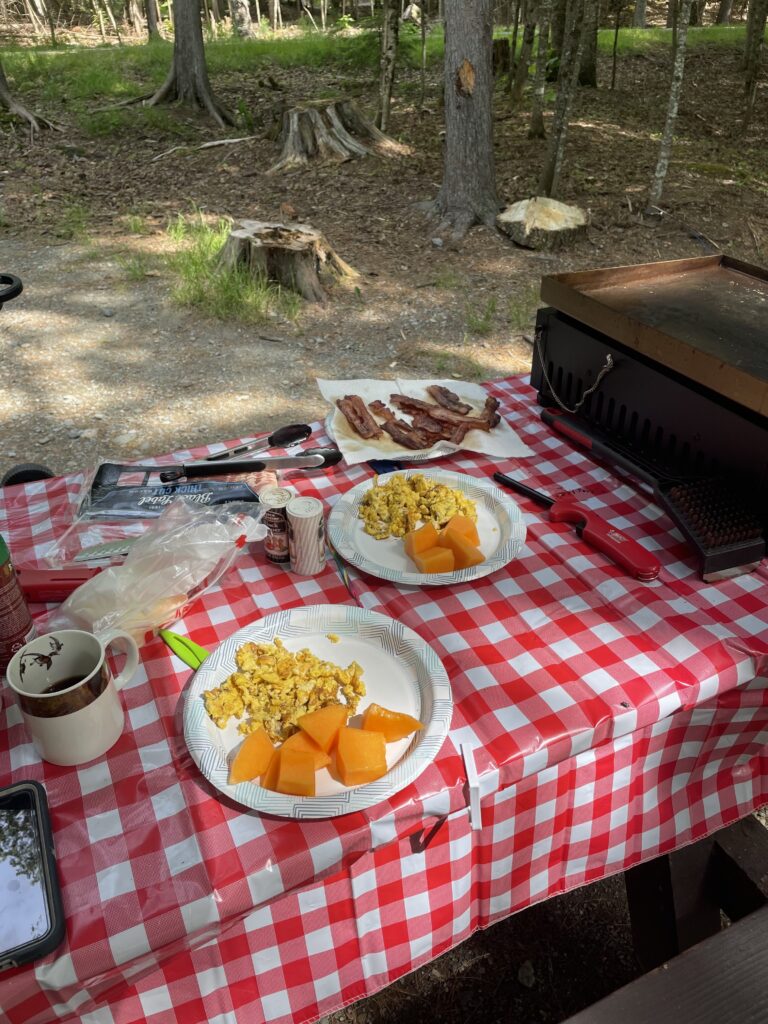
Camping meal prep can make or break your trip. Preparing food at home—such as chopping vegetables, pre-cooking meals, or portioning snacks—makes camp cooking faster and easier. Simple camping meals mean fewer dishes, less stress, and more time to relax around the campfire. Prepping ahead also helps when camping with kids or during short weekend trips.
Always Check the Weather Before You Go
Checking the camping weather forecast is a must. Knowing whether rain, heat, or cold temperatures are expected helps you pack the right camping clothing, rain gear, and bedding. Being prepared for weather changes keeps your camping trip comfortable and safe.
Decide What Type of Camping You’re Doing
Before packing your camping essentials, ask yourself a few important questions:
- Are you tent camping, RV camping, or glamping? Each style requires different camping equipment and setup.
- Are you camping close to home or exploring a new destination? First-time campers often prefer nearby campgrounds with amenities.
- Do you prefer a campground community or a more remote wilderness experience? Some campers enjoy family-friendly campgrounds, while others look for quiet, off-grid camping locations.
Understanding your camping style helps you choose the right campground and buy the right camping gear for beginners.
Keep It Simple and Build Confidence
Your first camping trip doesn’t need to be perfect—it just needs to be prepared. With organized camping storage, a reliable checklist, simple camping meals, and weather awareness, you’ll feel more confident and relaxed outdoors. Every trip builds experience, and soon camping will feel second nature.
With the right beginner camping tips, quality camping gear, and a little planning, you’ll be ready for many outdoor adventures ahead. 🌲
Pro Camping Tips That Make a Real Difference
These hard-won tips come from experienced campers who learned some things the fun (and sometimes difficult) way.
🔦
Practice setting up your tent
Do a full tent setup at home before your trip. Fumbling with poles in the rain or dark while tired is no fun — but doing it twice in your backyard takes 10 minutes and prevents that exact scenario.
🌡️
Always sleep warmer, not colder
It’s easy to ventilate if you’re warm. Being cold all night is miserable and can be dangerous. Buy a sleeping bag rated 10°F colder than the lowest expected temperature and you’ll thank yourself.
🍋
Prep meals at home
Chop vegetables, marinate proteins, and measure spices into small bags at home. Camp cooking becomes a pleasure — not a chore — when all the prep work is already done.
🐻
Store food properly, always
Never store food in your tent, not even sealed snacks. Use a bear canister, hang your food at least 200 feet from camp, or use provided bear boxes. This protects both wildlife and you.
👟
Break in your hiking boots before the trip
Brand new boots on a long hike are a recipe for blisters. Wear them on shorter walks for at least two weeks before your camping trip. Your feet will be grateful.
💧
Hydrate more than you think you need to
Outdoor activity, sun exposure, and altitude all increase your water needs dramatically. A good rule: drink before you feel thirsty, and eat salty snacks to retain hydration.
🗺️
Download offline maps before you go
Cell service is unreliable in most camping areas. Download your maps in apps like AllTrails, Gaia GPS, or Google Maps before leaving home. Always carry a paper backup too.
🔥
Buy firewood locally
Never transport firewood across state or county lines — it spreads invasive insects and disease that devastate forests. Buy firewood at or near your campground. It supports local communities too.
Your next adventure is waiting
The campfire is ready to be lit, the stars are waiting to be counted, and the woods are calling your name. You’re more prepared than you think — now go enjoy it.
“Not all who wander are lost — but the best ones had a really good checklist.”
— Every experienced camper, ever