The honest, unfiltered truth about tent camping and RV camping — what to expect, what can go sideways, and how to have the time of your life anyway
“We arrived at midnight, couldn’t find the campsite, set up the tent in the dark, and woke up at 3am completely soaked. Nobody warned us. This guide is for everyone who deserves better than that experience.”
Thinking about planning your first camping trip? Congratulations! You are about to embark on an adventure that is equal parts restorative, beautiful, and—if we’re being completely honest—potentially hilarious when things go wrong.
When you see those perfectly curated photos online of glowing tents under the Milky Way, or luxury RVs parked by pristine lakes, you’re seeing the result. What you don’t see are the learning curves, common beginner camping mistakes, and the surprising realities of sleeping outdoors.
Whether you’re planning on tent camping for beginners or trying out RV camping basics, this guide covers the crucial advice nobody mentions. We’ll explore the expectations, common pitfalls, and how to prepare so that your first experience is memorable for all the right reasons.
The Real Experience of Tent Camping
Tent camping is the most direct relationship you can have with nature. There’s no windshield, no TV, no thermostat — just you, some fabric, and the outdoors. It’s extraordinary. And occasionally humbling.
Sleep will not be like home — and that’s okay
The ground is hard. Strange sounds are everywhere. The light changes earlier than you’re used to. First-time campers almost universally report a rough first night. Bring a sleeping pad that’s thicker than you think you need. A self-inflating pad or foam pad makes an enormous difference. Air mattress or cot with pad makes it feel like heaven. Your second night will be far better.
- Tip: Never skip the camping gear essential of a quality sleeping pad or air mattress. Bring earplugs. Accept that Night One is an adjustment.
Condensation and the “Damp Morning”
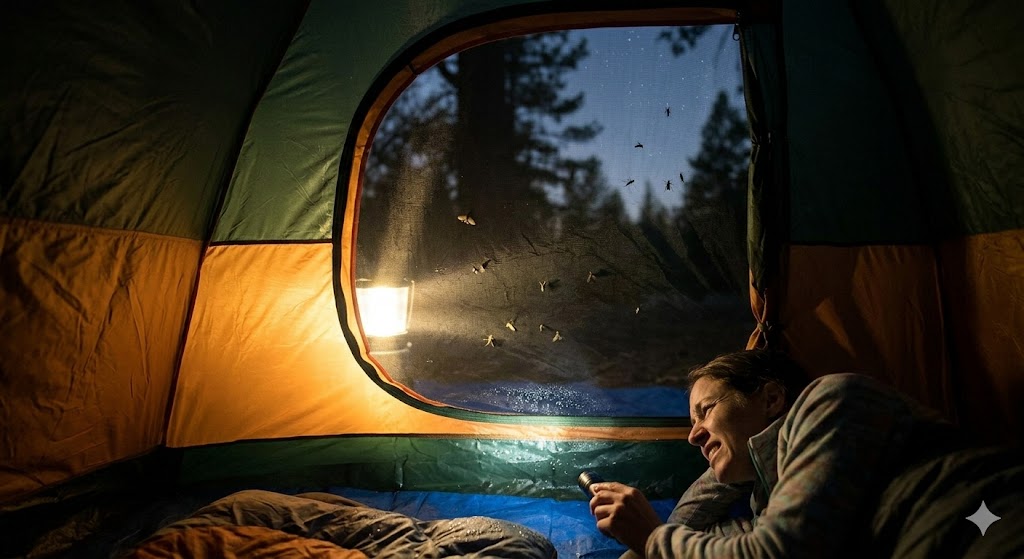
This is something first-time campers frequently miss. You check the weather, and it’s zero percent chance of rain. You wake up, and everything inside your tent feels slightly damp. Why? You are essentially sleeping in a sealed, waterproof bag, exhaling moisture all night. When that warm, humid air hits the cold tent walls, it turns into water droplets.
- Tip: Ventilation is key. Even if it’s cold, leave the rainfly vents open or crack the window mesh. You must let the moisture escape.
Bugs are inevitable — manage them, don’t fear them
Mosquitoes, gnats, and flies are part of the experience. A quality DEET-based repellent or picaridin spray handles most of it. Bring a small mesh head net for dawn and dusk when bugs peak. Keep your tent zipped — even for a moment of distraction when entering.
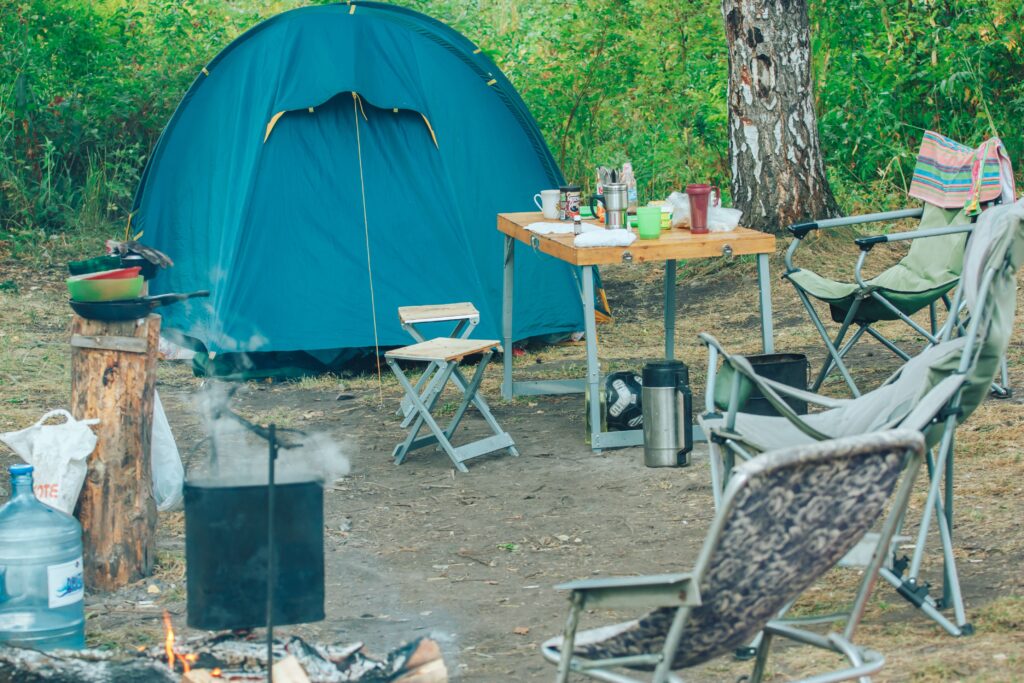
What can go right
- Waking up to birdsong and morning mist
- A stunning campfire with friends or family
- Unplugging completely and truly relaxing
- Stars you’ve never seen near the city
- Cooking outdoors tastes incredible
- Kids absolutely love it
What can go wrong
- Arriving after dark and struggling to set up
- Waking up damp from condensation
- Unexpected rain on an unprepared tent
- Ground is too rocky, tent is unlevel
- Forgetting critical items (headlamp!)
- Underestimating cold overnight temps
Setting up your tent — practice at home first
This is the single best piece of advice for first-time campers. Set up your tent in your backyard or living room before your trip. Know how the poles connect. Know how the rainfly attaches. Doing this for the first time in the dark at a campsite is a miserable experience that is 100% avoidable.
Setting Up in the Dark (A Rites of Passage)
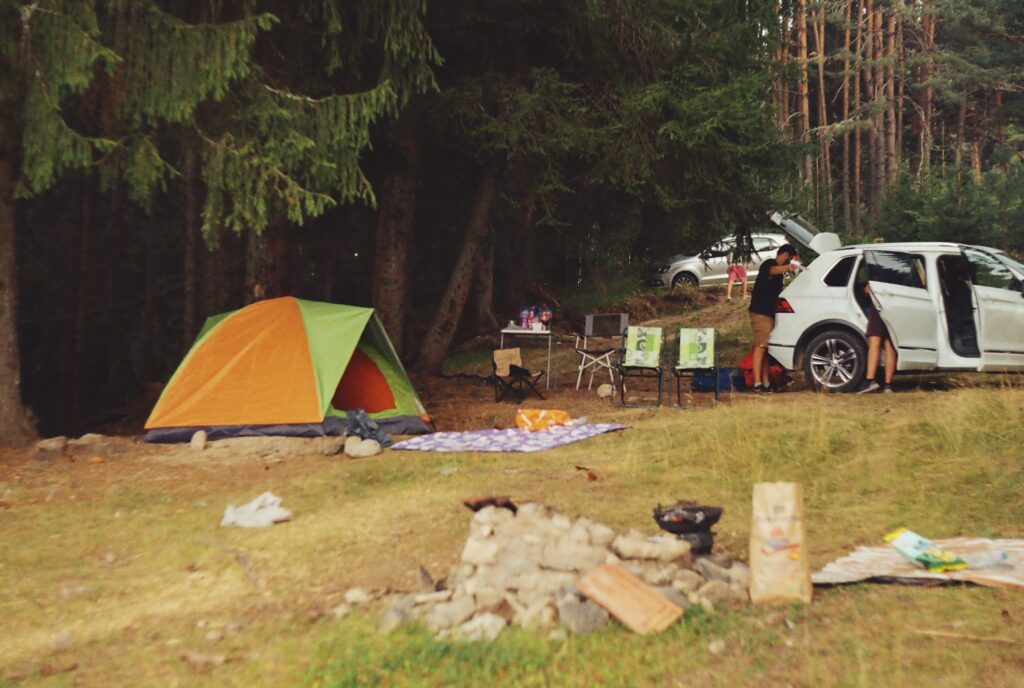
This is the golden rule: Always arrive at your campsite in the daylight. The first image of the couple setting up their blue tarp while the sun sets (Image 1) shows them doing it right.
What Can Go Wrong: Attempting your very first tent pitch using only a dim flashlight or your car’s headlights while tired, hungry, and stressed is a recipe for an argument and a poorly constructed shelter. Finding level ground, identifying rocks, and routing poles all require visibility.
- Tip: Plan your travel time to arrive at least two hours before sunset. This gives you a buffer for traffic and a stress-free setup.
Why Checking the Weather Changes Everything
Experienced campers are obsessive weather checkers — and with good reason. A camping trip planned without a close eye on the forecast is a trip that’s planning to be improvised at the worst possible moment.
Look at the full 5-day forecast. Pay attention to overnight lows — not just daytime highs. Look for the probability of precipitation at night, not just during the day. Check wind speed if you’re tent camping, since a wind gust over 25mph can damage a tent or rip out stakes.
Useful apps for campers: Weather Underground (hyperlocal forecasts), MyRadar (storm tracking), and National Weather Service (most accurate for wilderness areas).
Prepared camper
- Checked forecast three days out
- Packed rain gear and a spare tarp
- Chose a sheltered campsite
- Staked tent with extra guy lines
- Brought warm layers for cold night
Unprepared camper
- Assumed warm day = warm night
- Left rainfly at home to “save space”
- Camped in a low spot that flooded
- Tent stakes pulled out in wind
- Packed only one thin blanket
First-time tent camping essentials checklist
- Tent with rainfly (tested at home)
- Sleeping bag rated for temperatures below your expected low
- Sleeping pad — insulated foam or self-inflating
- Headlamp per person + extra batteries
- Tarp — one for under the tent, one for shade/rain cover
- Bug repellent (DEET or picaridin)
- Camp stove + fuel or fire supplies
- Cooler with ice and food pre-prepped
- String lights or a lantern for camp ambiance at night
- Small towel for condensation management
- Weather app checked for the full trip duration
RV Camping (Luxury, But Still a Learning Curve)
Maybe you’ve decided to avoid the ground and rent an RV. This option provides a fixed roof, a real mattress, and electricity. But don’t be fooled; RVing is not just “a hotel on wheels.”
1. The Hookup Confession
The Truth: When you arrive at an “RV park with full hookups,” the work is just beginning. You don’t just park and relax. You must level the rig (crucial for your fridge and your sleep), connect the fresh water hose, and plug in the electricity. The image above shows a man connecting the water line while the woman manages the complex-looking surge protector (another essential item). The learning curve for hookups can be steep.
What Can Go Wrong: Forgetting to use a water pressure regulator and bursting your RV plumbing. Not using a surge protector and frying your electrical system. Or the ultimate newbie mistake: leaving your black water (sewage) tank valve open while connected (trust us, do not do this).
2. Size (and Driving) Matters
RVs are tall and wide. Driving them requires constant awareness. You must plan your route for low bridges, tight turns, and gas stations with enough clearance. Parking is an art form that often requires teamwork and spotters.
- Tip: If renting, practice driving the RV in a large, empty lot before hitting the road.
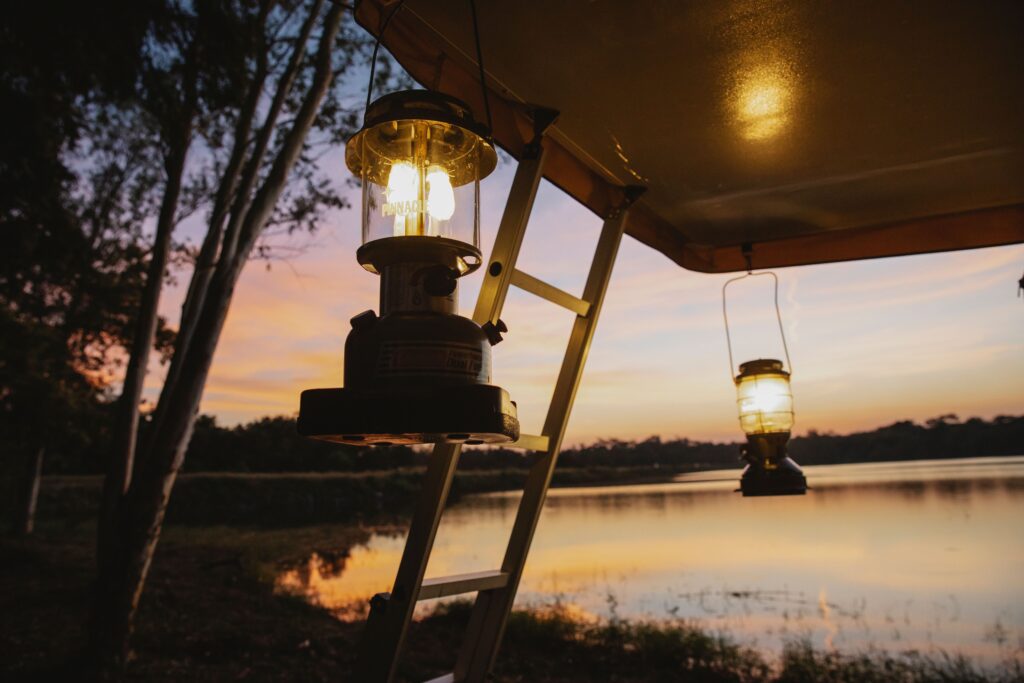
Lighting Up Your Campsite: a Beginner’s Secret Weapon
A well-lit campsite is the difference between a camping trip that feels magical and one that feels stressful. Most first-timers seriously underestimate how dark a campsite gets — and how much difference good lighting makes to the whole experience.
The three lights you actually need
Think of your lighting in three layers: task lighting (headlamps for hands-on work), area lighting (a camp lantern for the table and cooking area), and ambient lighting (string lights that make your site feel warm and inviting). The string lights aren’t a luxury — they genuinely change the mood of your evenings and help you navigate safely after dark.
Headlamps over flashlights, always
A headlamp keeps your hands free. You’ll need your hands free constantly — for cooking, for helping with tent zippers, for reading, for not tripping on your way to the bathroom. Every single person in your group should have their own. Bring backup batteries.
Solar lanterns are a brilliant camping tool
A collapsible solar lantern charges during the day hanging from a tree and provides several hours of light at night with zero battery cost. They’re lightweight, packable, and a perfect backup option for both tent and RV campers.
Summary Checklist: Your “Before You Go” Essentials
To make sure your trip highlights include great campfires and stunning views, rather than leaks and arguments, prioritize these four steps:
- Check the Weather (Constantly): Do not trust a single forecast. Check the forecast for your specific destination (elevations matter) several times in the days leading up to your trip. Know the difference between a slight drizzle and a serious thunderstorm.
- Bring Extra Tarps: As seen in Image 1, tarps are essential. You need one under your tent (tucked completely underneath) to protect the floor. Bring an extra one and some rope; this allows you to create a dry, covered outdoor area over your picnic table if it does rain.
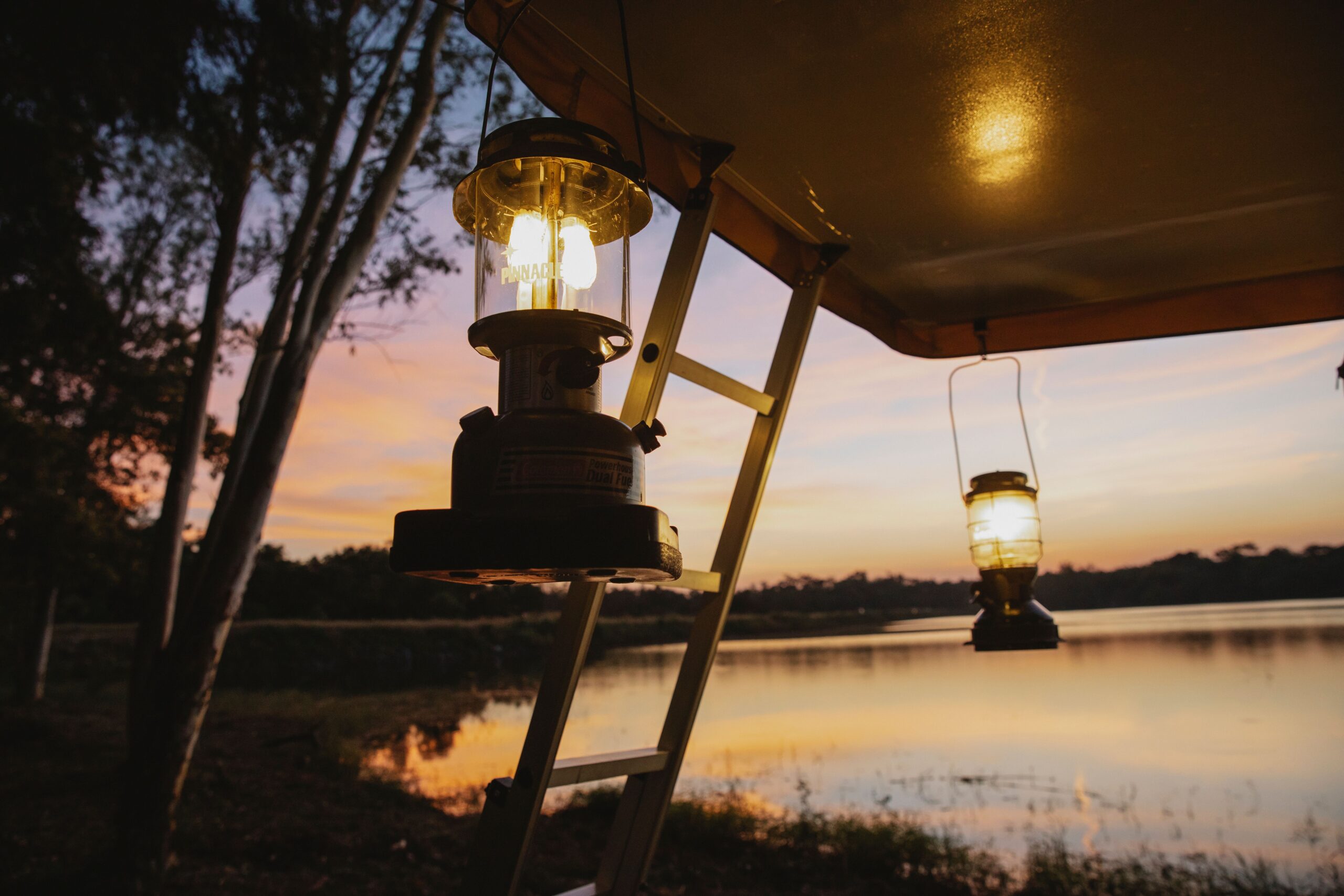
- Invest in Good Lights: You need multiple light sources. Lanterns for ambient light (like the one in Image 2), but most importantly, robust LED headlamps for hands-free tasks, like walking to the bathroom at 2 AM or performing repairs.
- Do a Practice Run: Pitch your tent in the backyard or living room once. Drive the RV. Ensure all pieces (poles, stakes, hoses, adapters) are present and that you know how they work before you are in the woods.
Camping is an incredible way to disconnect and recharge. It is almost guaranteed that something will go wrong, but if you arrive prepared, in the daylight, and with the right gear, these common beginner camping mistakes become part of the adventure story. Pack your sense of humor alongside your extra tarps—it’s the most useful item you can bring.