6 Beginner Camping Tips
Embarking on your first family camping trip is a thrilling milestone. Whether you’re pitching a tent or setting up an RV, your safety and essentials is the foundation of a great experience. It’s natural to have questions about the logistics, but the right preparation transforms uncertainty into confidence.
This guide is designed to empower you with the knowledge and tools needed for a safe, joyful, and stress-free adventure and covers the camping safety tips for beginners you need to feel like a pro from day one.
1. Building Your Confidence: Pro Tips for Beginners
Preparation is the secret to a relaxing trip. These foundational steps will help you feel like an experienced camper from the very first night:
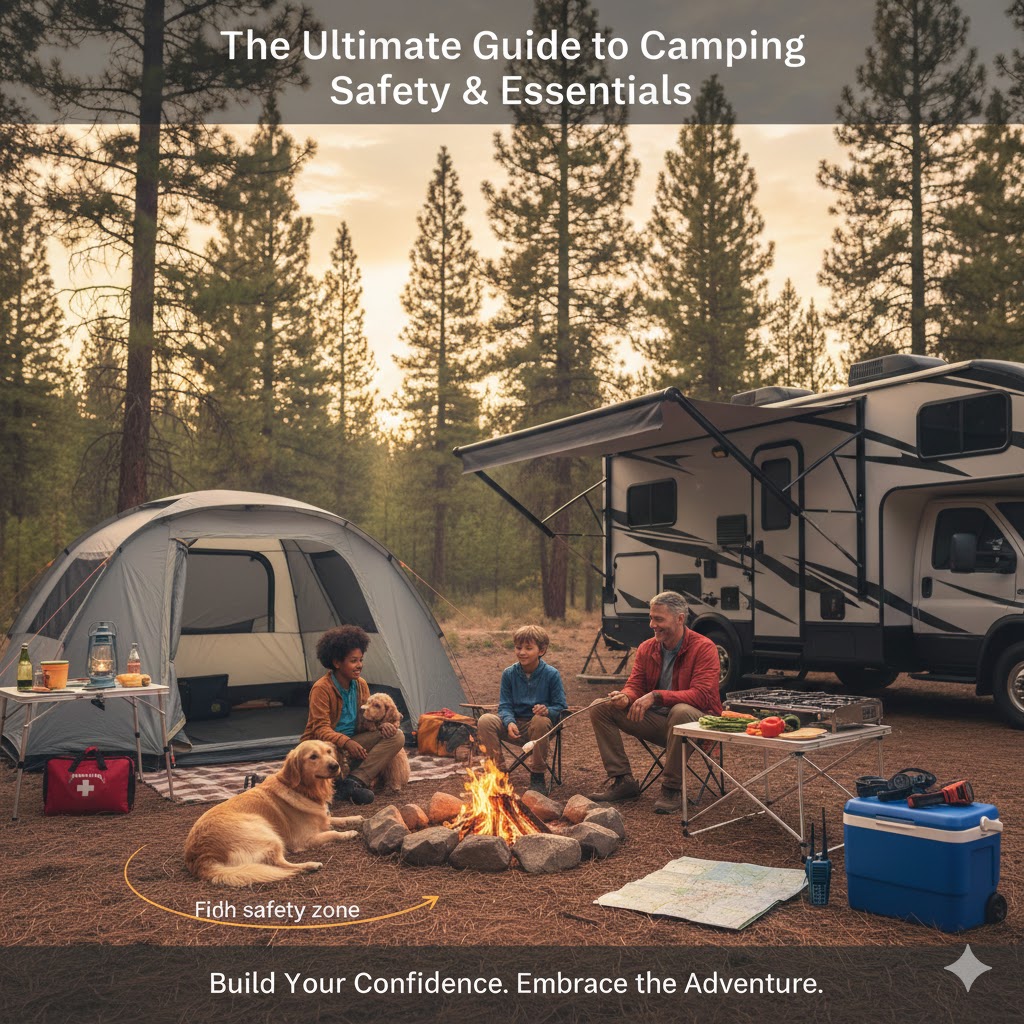
- Backyard Trial Run: Set up your tent in your yard or a local park before your trip. This helps you master the assembly, makes sure you aren’t missing any important parts, and ensures everyone—including kids and pets—feels comfortable in the new space.
- Prioritize Daylight: Plan to arrive at your campsite at least two hours before sunset. Setting up in the light is much safer, less stressful and allows you to familiarize yourself with the surroundings.
- Stay Connected and Informed: Always let someone know where you are. While you’re there, keep everyone on a “buddy system” to ensure no one wanders off alone.
- Hydration First: It’s easy to get caught up in the fun! Ensure everyone has a dedicated water bottle and drinks regularly to stay energized and clear-headed. Especially on a hot day!
2. Essential Safety Gear
Having the right tools on hand provides a wonderful sense of security. Beyond your basic shelter, consider these essentials:
- Reliable Lighting: Ensure every camper has their own light source. Headlamps are particularly helpful because they keep your hands free for tasks like cooking or walking.
- Redundant Navigation: Even if you rely on your phone, bring a physical map of the area or a dedicated satellite communicator for areas where cell service might fade.
- Layers, Layers, Layers! : Nature can be unpredictable. Packing moisture-wicking layers and a solid rain jacket ensures that a change in weather is just a small adjustment, not a trip-stopper.
3. The Complete First Aid Kit
A well-stocked kit is your best friend for minor bumps and scrapes. For a family-friendly trip, make sure your kit includes:
- Medical Basics: Various sizes of bandages, antiseptic wipes, sterile gauze, and medical tape.
- Medications: Pain relievers, antihistamines for unexpected allergies, and any personal prescriptions. Itch cream for possible skin rash like duck itch from lakes or ponds.
- Kids, Babies and Dogs Additions: Include child-safe sunscreen, a tick-removal tool, and self-adhering bandages that won’t stick to pet fur. Family friendly bug repellent. I bring oil of oregano essential oil to put on tick bites. It’s a powerful anti-infective. You might want to mix it with a carrier oil. Although, it’s no replacement for treatment from your doctor for a tick bite!
4. Wildlife & Campfire Safety
Respecting the environment keeps both you and the local wildlife safe:
- Smart Food Storage: Store all food and scented items in bear-proof containers or a locked vehicle. Keeping your sleeping area “scent-free” is the best way to avoid curious visitors.
- The Safe Fire Zone: Create a clear boundary (about 5 feet) around your fire pit that children and pets know not to cross.
- Complete Extinguishment: Before heading to bed, drown your fire with water and stir the ashes until they are cool to the touch.
5. RV Safety Essentials
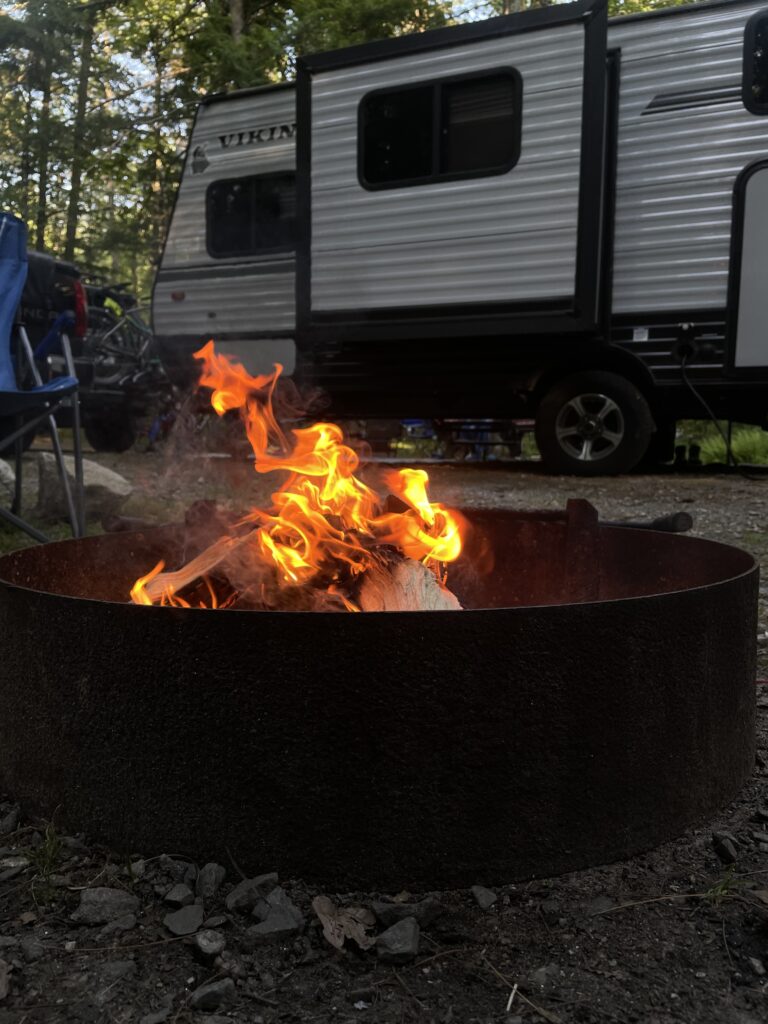
If you are traveling in a “home on wheels,” these technical additions will keep your systems running smoothly:
- Electrical Protection: Use a high-quality surge protector to shield your RV’s appliances from unstable campground power.
- Water Management: A water pressure regulator is vital to protect your interior plumbing from the high-pressure systems found at many parks.
- Stability and Security: Always use heavy-duty wheel chocks before unhitching to ensure your rig stays exactly where you parked it.
- Tire Monitoring: A TPMS (Tire Pressure Monitoring System) is vital for preventing blowouts on the highway.
6. Highly Rated Essentials for 2026
- Adventure Medical Kits: A top-rated, compact choice for hiking and camping families.
- BioLite AlpenGlow: A versatile lantern that provides excellent site lighting and is durable enough for rugged use.
- Garmin inReach Messenger Plus: A top-tier choice for emergency communication and staying in touch when you are off the grid.
You are fully capable of navigating the outdoors and creating an incredible experience for your family. With these safety and essentials tips in place, you can focus on the best part: enjoying the fresh air and the company of your loved ones!